


Even though Maui is a place of fabulous water, good sand beaches, and first-class snorkeling and surfing, it is also true that the mere idea of sharks can terrify and confuse some visitors. What we have experienced from our Maui kayaking tours is that a great number of the tourists are literally terrified of the sharks, and the majority of the fear is a result of disinformation and their distorted impressions.
If you are among the people who had any doubts before diving into the Pacific, you’re not alone. The facts are quite simple and relieving, though: Shark attacks in Maui are extremely rare, and a number of safety measures are being implemented in order to ensure that you feel safe. Throughout the study, we will go over why shark attacks are so infrequent, which sharks are there in the waters of Maui, the marine ecosystem, the cultural significance in Hawaii, and what you should do in order to stay safe while indulging in the ocean matters.
What Are the Chances of a Shark Attack in Maui?
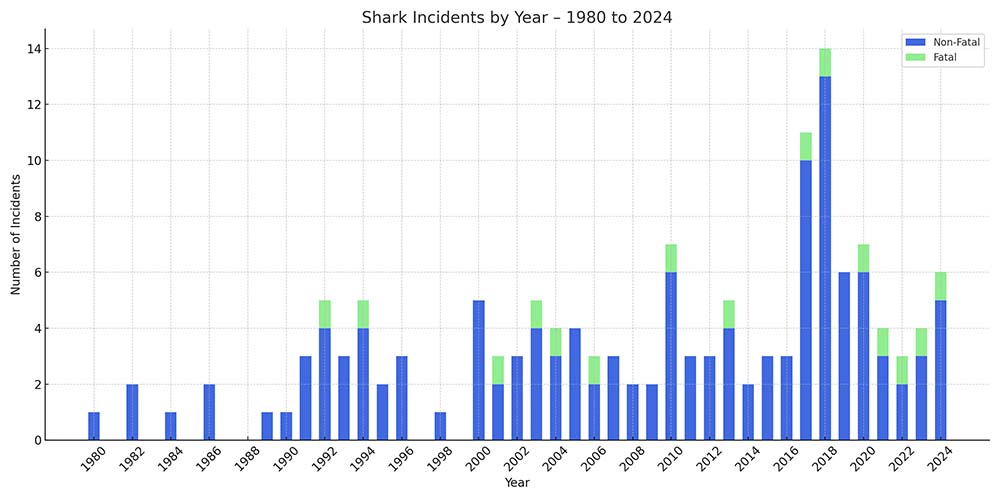
Speaking of numbers, the likelihood of a shark attack during your visit to Maui is quite minimal. As per the Hawaii Department of Land and Natural Resources (DLNR), the entire state of Hawaii has only three or four shark incidents on average annually, and the bulk of those are non-severe. Instances of lethal shark attacks are very unusual, and a major proportion of cases occur due to certain preventable causes.
Shark Attack Statistics in Hawaii:
- From 1980 to the present, Hawaii has recorded just over 130 shark incidents.
- The lifetime odds of a shark attack in Hawaii are estimated to be 1 in 11.5 million.
- The chances of a person in Hawaii to experience a shark attack during the whole life are said to be approximately 1 in 11.5 million.
Most of the cases happen in such conditions as:
- Alone in the ocean or sea
- Getting into the water without seeing the sun or just before the sun rises/sets
- Fishing by means of diving or carrying dead fish
- Being in water that is not clear or being in the water too deeply
For instance, as far as the comparison is concerned, you are more likely to get hurt by:
- Heavy coconuts are dropping to the ground
- Sea currents that might pull you out into the ocean
- Stings from jellyfish
- Dangerous or reckless driving on the way to the place of swimming or sunbathing
Put simply, the risk of a shark attack is almost nonexistent in Maui, and you are much more likely to enjoy a wonderful experience of the Island’s waters.
Which Sharks Are Found in Maui’s Waters?
Due to their role as top predators, sharks control the population of prey species and at the same time, ensure the energy flow in the ocean food chain.
Common Sharks Near Maui:
Tiger Sharks (Galeocerdo cuvier)
Tiger sharks are the most frequently involved species in Hawaii’s rare shark incidents. They are curious predators that occasionally venture into shallower waters but generally avoid human contact.
Reef Sharks (Blacktip, Whitetip, and Gray)
These smaller species are frequently spotted near coral reefs. They tend to be shy and non-aggressive unless provoked.
Hammerhead Sharks
Scalloped hammerheads can occasionally be seen during pupping season, when they move closer to shore to give birth. They are rarely a threat to humans.
Oceanic Whitetip and Galapagos Sharks
These species typically inhabit deeper offshore waters and are rarely encountered by beachgoers.
Shark behavior is largely misunderstood. Most species are not interested in humans and will avoid contact if possible. The rare encounters that do occur are usually cases of mistaken identity—for example, a shark mistaking a swimmer for a turtle or fish.
Why Are Sharks Important to Ocean Balance?
Due to their role as top predators, sharks control the population of prey species and at the same time, ensure the energy flow in the ocean food chain.
Ecological Benefits of Sharks:
- Population Control: Sharks are eliminating the fish species that are sick, weak, or old, resulting in the production of healthy fish populations.
- Healthy environment: Their predatory nature affects the behavior of the herbivores, thus, no overgrazing of the coral reefs ever happens.
- Protection of biodiversity: Through the maintenance of balance, sharks provide the opportunity for the existence of many kinds of sea creatures.
Research has indicated that the elimination of sharks from the food web disrupts the ecosystems out of order and the decline of fish and coral reefs is a consequence. For instance, the situation in some regions is worsening due to the overfishing of sharks, causing an overflow of mid-level predators, thus, of shellfish, and also of coral-cleaning fish, which all in all affects the population in that area to some extent.
By protecting sharks, we are, in essence, ensuring that the present ocean environments, which are key to global tourism, recreation, and biodiversity, will be healthy and sustainable in the future.
What Do Sharks Represent in Hawaiian Culture?
Hawaiians perceive sharks not as hazards but as the gods of the oceans that are to be respected. Mano as they are also called, is a term that represents the shark, which in the Hawaiian tradition is quite a special character and is looked upon as an ancestral protector or aumākua in many cases.
Cultural Beliefs:
- Many Hawaiian families believe that some of their ancestors appeared in the form of sharks in order to protect them.
- Sharks are mentioned in most of the islands’ chants, legends, and hula traditions.
- Certain sharks were considered “kapu” (forbidden) to kill as they were thought to be sacred.
The sharks, besides being the highly revered spiritual symbols, were the beings that lived right by people, and their physical existence was visible everyday life of every Hawaiian up to the 19th century. The teeth of the shark were used as weapons and tools, whereas their movements helped to forecast the weather and the whereabouts of the fish. This cultural regard that was once prevalent still informs the conservation projects and the ocean protection in Hawaii.
What Can You Do to Stay Safe in the Ocean?
It’s always good practice to keep in mind essential ocean safety measures while enjoying nature’s sea paradise of Maui, despite how the possibility of shark attacks is rare. Below are simple, real-life pieces of advice:
Do:
- Swim and snorkel in groups whenever possible
- Stay in clear water during daylight hours
- Heed local warning signs and lifeguard instructions
- Avoid swimming near fishing boats or where fish remains are present
Don’t:
- Enter the water with open cuts or bleeding wounds.
- Wear shiny jewelry or bright clothing that might resemble fish scales
- Swim at dawn, dusk, or night, when visibility is lower and sharks are more active
Safety Measures in Maui:
- Lifeguards and local authorities monitor shark activity
- Warning signs are posted at beaches after sightings
- Tour operators are trained in ocean safety and emergency protocols
Through the observance of these measures and the conscious effort to be well informed, you are reducing even further the very low chances of experiencing a shark encounter.
Now that you know shark encounters are extremely rare and that our team follows strict ocean safety protocols, why not experience Maui’s incredible marine life up close?

Turtle Reef Discovery Tour at Makena Bay
Join our Makena Turtle Reef Snorkel Tour — guided by certified local experts trained in safety and marine conservation.
✔ Small group sizes and certified ocean guides
✔ Guaranteed turtle sightings
🕒 Duration: 3 hours | From: $109
✔ Free cancellation: up to 24 hours